Plants and Microbiome – Fundamental to human food security
Plants are key natural resources that provide food, medicine, and economic opportunities to human beings. We can develop plant resources using biotechnology approaches to improve the benefits associated with them. One of the key questions is how we can enhance plant abilities to resist stressful conditions (such as low or high water levels) by understanding genes, biomolecules, and metabolites. One of the key resources is “Microbes” that are associated with plants and provide them with an unprecedented amount of benefits, including resistance to stress, mobilizing nutrients into roots, and
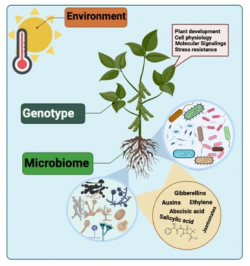
producing beneficial substances (enzymes and metabolites). Utilizing a total sum of microbes associated with plants can increase opportunities for reducing fertilizer input (less $ spent on growing crop plants) and improving biomass that could be essential for developing various products (such as animal feed, bioethanol, food, etc). Hence, by utilizing microbes-to-microbiome approaches, we can address abiotic stresses, productivity issues, and resolve associated environmental problems.
In addition to understanding fundamental knowledge about plant-microbe interactions, we also focus on using the naturally occurring microbes to solve issues related to (i) plastic degradation in soil, (ii) ecoenzymes production, and (iii) microbe-assisted phytoremediation to decontaminate soil and water from heavy metals and petrochemical wastes.
Lab Approach:
- Adopting naturally occurring microbes to develop a biobank of stress – competent microbes that can improve plant growth, biomass, and yield
- Understanding microbiome structure, diversity, and function with plants and developing ways to enrich the rhizosphere with synthetic microbiome
- Integrating field and greenhouse-based studies, multi-omics (metagenomics, transcriptomics, genomics and metabolomics), microbiome networking, and physio-molecular mechanisms to elucidate the complexity of plant-microbiome and stress-interactions
- Understanding the genomics and evolutionary history of unique ecologically, medicinally, and economically important plants
Areas of Research:
- Microbiome role and function with plants
- Plant and microbial genetic engineering for improved stress tolerance and nutrient uptake
- Soil microbiome for nutrient cycling
- Microbe – assisted bioremediation