Molecular Stress Physiology
By understanding the functions and mechanisms in morphology, biochemical, metabolites, and molecular levels and their responses to different environmental changes, one can select specific traits and abilities to develop improved plant and microbial functions and benefits. Stress physiology includes biochemistry, functional biotechnology, computational and synthetic plant biology, growth and development, metabolism, transport and translocation, plant-microbe interactions, ecological physiology, and biotic and abiotic stresses. Microbial physiology can reasonably be defined as “structure-function relationships in microorganisms, especially how microbes respond to their environment.
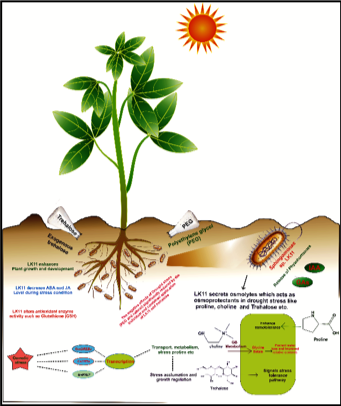
We try to understand important questions like:
- How are abiotic stresses influencing the molecular signal networks involved in stress tolerance, yield, and growth of plants?
- How does the metabolome change and function in response to environmental stresses?
- What are biosynthetic pathways and gene regulatory dynamics that can be enhanced through gene-editing technologies?
Approaches:
This research work involves several methodologies, such as:
- Plant growth in controlled environmental chambers and their exposure to various climatic conditions
- Performing RNA-Seq of leaf, seed, root, shoot, and fruits with the help of Illumina and or nanopore sequencer
- In-depth bioinformatic analysis of RNA-Seq data to understand gene regulatory networks and biosynthetic mechanisms involved during such conditions.
- Gene-editing (overexpression and knockout) using cloning and transformation approaches.
Current project:
- Improvement of nutrient uptake via roots during enhanced drought stress conditions (Information available soon)
- Drought stress to wheat and soybean plants to understand influence of changes in soil chemistry (Information available soon)
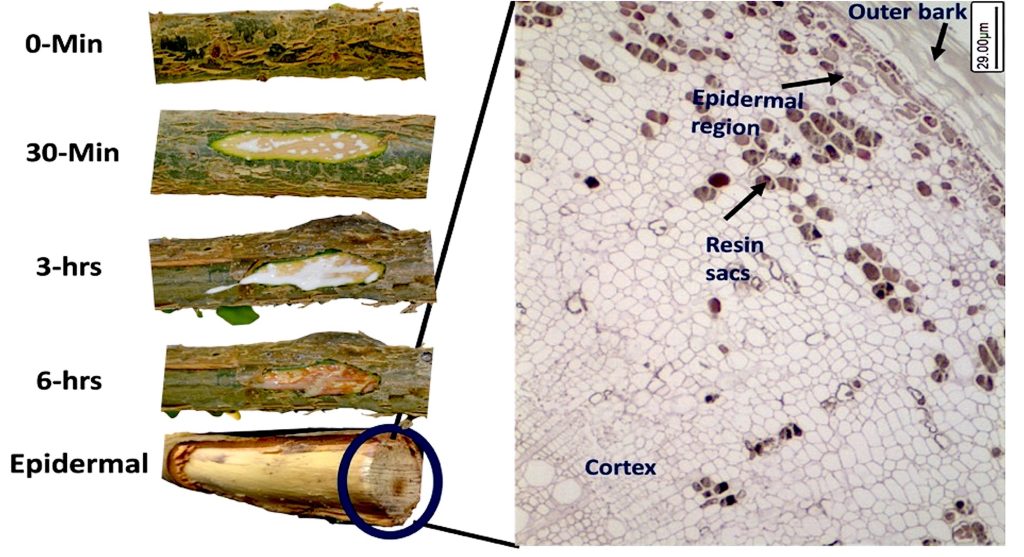
- Transcriptome analysis of resin synthesis process in Boswellia sacra (Frankincense tree).